what I read last week
the lost daughter by elena ferrante, the memory police by yoko ogawa

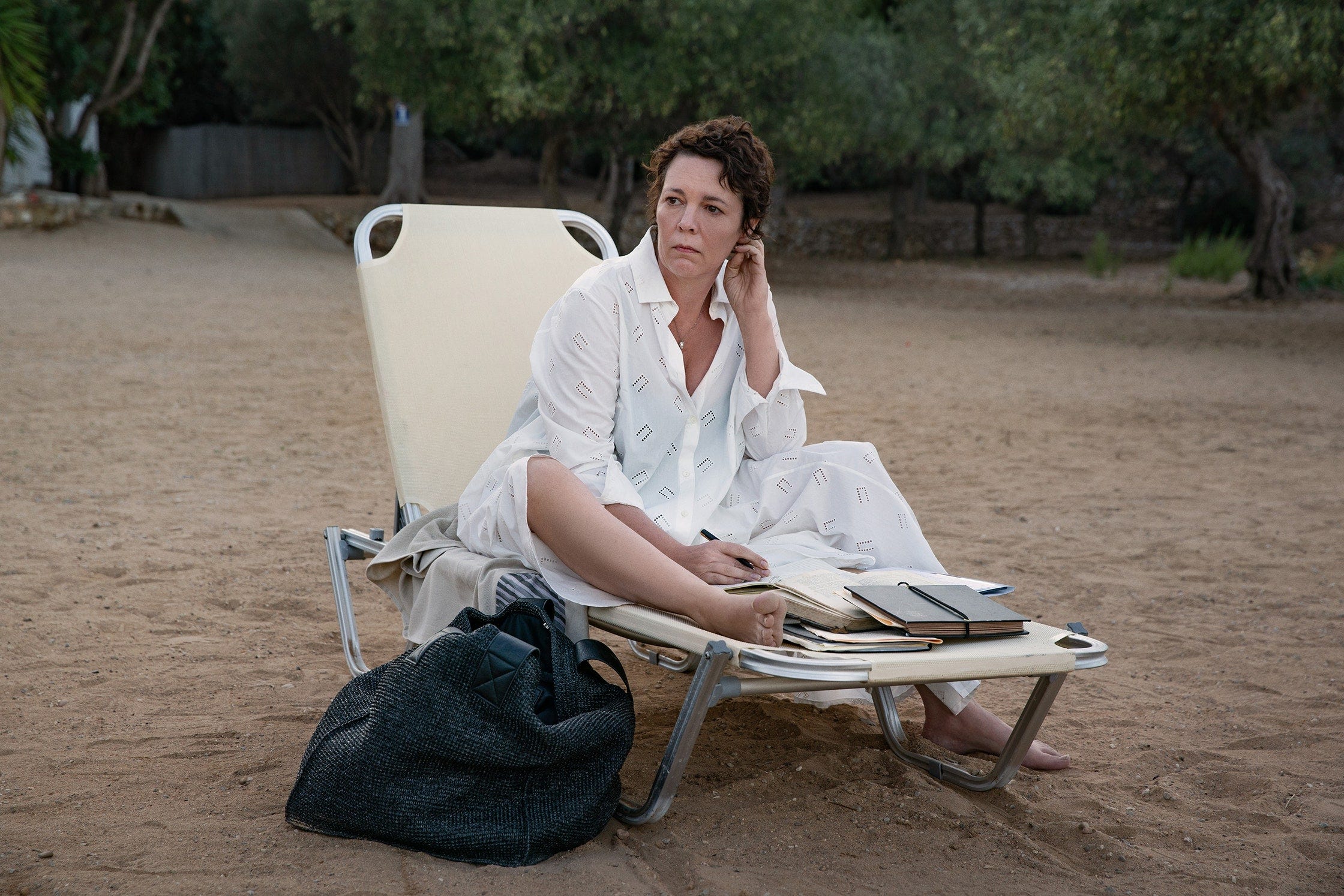
Good morning!
This past week, I read two translated works of fiction—The Lost Daughter by Elena Ferrante and The Memory Police by Yōko Ogawa. Let’s get into it.

read📖→
The Lost Daughter by Elena Ferrante, translated from Italian by Ann Goldstein

The Lost Daughter follows Leda, a literature professor, on vacation on the Italian coast, as she reflects on her life and motherhood.
Overview: The Lost Daughter opens with Leda describing how she ended up in the hospital after crashing her car into a guardrail:
I said it was drowsiness that had sent me off the road. But I knew very well that drowsiness wasn’t to blame. At the origin was a gesture of mine that made no sense, and which, precisely because it was senseless, I immediately decided not to speak of to anyone. The hardest things to talk about are the ones we ourselves can’t understand.
Ferrante then takes us back to Leda’s summer vacation on the Ionian coast. Leda narrates the novel in the first person. Leda spends her summer days heading to the beach to write and unwind. Her mind meanders as she reflects on her past. We learn that Leda is originally from Naples and is long divorced. Her adult daughters, Bianca and Marta, have recently moved to Toronto, where their father lives.
At the beach, Leda observes a young Neapolitan mother, Nina, and her daughter, Elena. Leda envies the closeness between Elena and Nina, particularly given her own strained relationship with her mother:
[Nina] talked to the child and her doll in the pleasing cadence of the Neapolitan dialect that I love, the tender language of playfulness and sweet nothings. I was enchanted. Languages for me have a secret venom that every so often foams up and for which there is no antidote. I remember the dialect on my mother’s lips when she lost that gentle cadence and yelled at us, poisoned by her unhappiness: I can’t take you anymore, I can’t take any more. Commands, shouts, insults, life stretching into her words, as when a frayed nerve is just touched, and the pain scrapes away all self-control. Once, twice, three times she threatened us, her daughters, that she would leave, you’ll wake up in the morning and won’t find me here. And every morning I woke trembling with fear. In reality she was always there, in her words she was constantly disappearing from home. That woman, Nina, seemed serene, and I felt envious.
One day, Elena goes missing at the beach, and Nina is frantic, “mad with anxiety,” as she searches for her lost daughter. Leda recalls a time when she lost her young daughter: “A child who gets lost on the beach sees everything unchanged and yet no longer recognizes anything. She is without orientation, something that before had made bathers and umbrellas recognizable.” Leda steps in and finds Nina and returns her to her family. Later on, something else goes missing at the beach: Nina’s beloved doll.
Ferrante follows Leda as she quietly becomes entangled with Elena and Nina and reflects on her relationships with her own mother and daughters.
Opinion: The Lost Daughter is a slim but powerful novella. The writing—unsurprisingly for Ferrante—is extraordinary. Ferrante writes lush, vivid descriptions of the coast and seamlessly weaves in Leda’s reflections: “The sand was white powder, I took a long swim in transparent water, and sat in the sun.”
The taut prose and flashbacks make The Lost Daughter read somewhat like a psychological thriller. The countless layers slowly unravel, like the fruit Leda peels for her daughters: “when I peel fruit I am finicky about making sure that the knife cuts without ever breaking the peel . . . maybe it’s my taste for ambitious and stubbornly precise work.”
While seemingly at ease during her holiday, Leda is on the verge of falling apart as she reckons with her past and the “crushing weight” of maternal responsibility, “the bond that strangles.” The Lost Daughter is ultimately a novel about maternal ambivalence and neglect. Complex mother-daughter relationships abound, and there are several “lost daughters”—Leda, Leda’s daughters, Elena, and Elena’s doll. For Leda, motherhood has erased her sense of self. As she explains to Nina: “I loved [my daughters] too much and it seemed to me that love for them would keep me from becoming myself.” At the novel’s close, she admits: “I’m an unnatural mother.”
Ferrante’s use of language is fascinating here. Leda is from Naples but moved to Florence in search of “a bourgeois decorum, proper Italian, a good life, cultured and reflective.” For her, Naples was a “deep well” or “a wave that would drown [her].” She sees herself in Elena’s family and describes their Neopolitan dialect as having a “pleasing cadence,” but the dialect can turn violent and menacing. For instance, as Elena’s father and uncles argued, “every question sounded on their lips like an order barely disguised . . . if necessary they could be vulgarly insulting and violent.”
Overall: The Lost Daughter is an unnerving, disquieting read. It’s a nuanced portrait of maternal neglect and motherhood. I highly recommend it if that sounds remotely interesting to you.
Rating: 4.5/5
Genre: Literary Fiction
Page count: 140 pages
Audio: 4 hours 57 minutes
Movie/TV pairings: The Lost Daughter (film adaptation)
The Memory Police by Yōko Ogawa, translated from Japanese by Stephen Snyder

The Memory Police is a dystopian novel about the inhabitants of an unnamed Japanese island where things and creatures—roses, birds, hats, ferries, novels—gradually disappear.
Overview: The Memory Police is narrated from the first-person perspective of a young novelist living on an island off the coast of Japan. Items routinely vanish from the island, and its inhabitants must forget about them. For instance, when roses disappear, people start to notice a shift in the winds: “The breeze seemed to discriminate, choosing only the rose petals to scatter.” People then proceed to dig up rosebushes and throw them into the sea or burn them. Other evidence that roses existed, like in drawings or books, are removed by the Memory Police. As the novelist explains, “The first duty of the Memory Police [is] to enforce the disappearance.”
After the object and all traces of it are removed, amnesia sets in. People not only forget the item that has disappeared but also all associated memories of the thing. The inhabitants quickly adjust to the new normal: “We shrug them off with as little fuss as possible and make do with what’s left. Just as we always have.” When the novelist encounters an object that she has forgotten about, she only feels emptiness.
While the vast majority of the island’s inhabitants forget about the item, some remember. The Memory Police steps in again to force those who remember to forget. In some cases, the Memory Police disappear people, like the novelist’s mother.
The novelist’s editor, R, is another person who remembers things. The novelist hides R from the Memory Police along with things that have been erased from the island. Ogawa follows the novelist as she navigates this dystopian world.
Opinion: Originally published in 1994, The Memory Police was translated and published in English in 2019. Ogawa’s hypnotic writing drew me in. The writing style transforms as the novel progresses. These stylistic changes mirror how the novelist loses her memories and recognition of certain objects.
We never really learn who the Memory Police are or what their motivations are. Ogawa’s world is possibly a bit too skeletal and ambiguous—I felt detached from the protagonist, despite the first-person narration.
That said, Ogawa teases out some fascinating themes. The Memory Police can be read as a political commentary on regimes that subjugate and “disappear” people and ideas. It could also be interpreted as a statement on society’s short and limited memory of the past and how we pass ideas down. The islanders actively get rid of things; there is no magic here that dissolves the items and things into thin air.
For me, The Memory Police reads less like a political or social commentary and more like a meditation on death and loss. As the islanders slowly lose more and more memories, they feel muted and hollowed out: “But as things got thinner, more full of holes, our hearts got thinner, too, diluted somehow.” The novelist likens the experience of forgetting to losing her voice, like an insect whose antennae are cut off and has lost the ability to perceive the world for itself. How do we define ourselves and our cultures? Who are we without memories?
Overall: The Memory Police is an unsettling, meandering novel. I’d recommend it to anyone who likes dystopian literary fiction, with the caveat that it is relatively plotless and slow-moving.
Rating: 3.7/5
Genre: Dystopia; Literary Fiction
Notable prizes/book clubs/lists: Longlisted for the International Booker Prize (2020); National Book Award Finalist
Page count: 288 pages
Audio: 9 hours 8 minutes
consumed 🎬🎧🗞️→

What happened to Portland in The Rolling Stone.

Don Petit’s photographs from space in The New York Times.

I reread “Leda and the Swan” by William Butler Yeats after finishing The Lost Daughter.
cooked 🍳→